"Should I Pay Down My 6% Mortgage or Invest?" A Charlotte Financial Advisor's Answer
Wondering whether to pay off your mortgage or invest extra money? A Charlotte financial advisor explains the math and pros and cons.

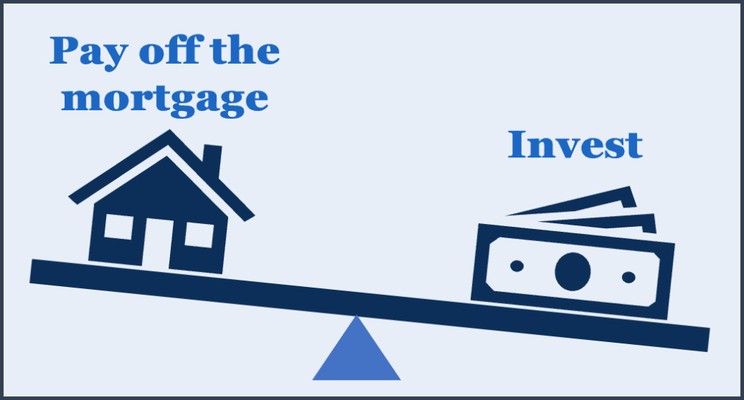

Wondering whether to pay off your mortgage or invest extra money? A Charlotte financial advisor explains the math and pros and cons.
This is one of the most common questions I hear in my practice. A client will sit down across from me, often with a spreadsheet pulled up on their phone, and ask: "I have extra money each month and I'm paying 6% or more on my mortgage. Should I put that money toward paying it off faster, or should I invest it instead?"
It's a great question, and if you're reading this from Charlotte or anywhere else, you're probably wrestling with the same dilemma. While I can't give you personal advice without knowing your full financial situation, I can walk you through exactly how I help clients think through this decision.
Let's start with the numbers, because they matter.
When you make an extra payment on a 6% mortgage, you're essentially earning a guaranteed 6% return on that money. Not 5.9%, not 6.1%, exactly 6%. That's the interest you're avoiding by reducing your principal balance. And unlike investments, this return is completely risk-free and tax-free (since you're not earning taxable income, you're simply avoiding interest expense).
On the flip side, the stock market has historically returned around 10% annually over long periods. But that's an average that includes dramatic ups and downs. Some years you'll see 20%+ gains, others you'll watch your portfolio drop 30%. The key word here is "historically," past performance doesn't guarantee future results.
So purely from a mathematical standpoint, investing gives you the potential for higher returns, but paying down your mortgage gives you a guaranteed return equal to your interest rate.
Here's something the spreadsheets don't capture: how you feel about debt matters.
Some people sleep better at night knowing they're building wealth in investment accounts, even if they have mortgage debt. Others feel genuine stress about owing money, even if it's "good debt" at a reasonable rate. There's no right or wrong here. Your emotional relationship with debt is valid and should factor into your decision.
If carrying a mortgage keeps you up at night, the guaranteed peace of mind from paying it off might be worth more than the potential extra percentage points from investing. Financial decisions aren't made in a vacuum; they're made by human beings with emotions.
Before we go further, let's address the elephant in the room: do you have a solid emergency fund?
If you don't have at least 3-6 months of expenses saved in an easily accessible account, that should be your first priority. Neither paying down your mortgage nor investing in the market will help you if you lose your job or face a major unexpected expense. Build that foundation first.
Here's something many homeowners overlook: if you aggressively pay down your mortgage, you're concentrating more and more of your net worth in a single asset, your house.
Your home is real estate in one specific location. Whether you're in Charlotte, Raleigh, or anywhere else, if the local job market deteriorates, if the neighborhood declines, or if local property values simply stagnate, you could have hundreds of thousands of dollars tied up in an underperforming or even declining asset. You can't sell a bedroom to access some of that equity if you need it.
Compare that to a diversified investment portfolio, which might hold stocks from hundreds of companies across dozens of industries and multiple countries. If one company goes bankrupt, it barely moves the needle. If one sector struggles, others may thrive. That's the power of diversification.
This is particularly important if your job is also tied to the local economy. If you work for a major employer in your area and the company struggles, you could face both a job loss and a declining home value simultaneously. That's a double whammy you want to avoid.
From a pure wealth-building perspective, having your net worth spread across different asset classes (stocks, bonds, real estate, maybe even a business) is almost always preferable to having it concentrated in one property.
The length of time you plan to stay in your home should heavily influence this decision, and it's an area where I see people make costly mistakes.
If you're planning to move in the next 3-5 years, aggressive mortgage paydown rarely makes sense. Here's why: closing costs on a home sale typically run 8-10% of the sale price when you factor in realtor commissions, title fees, and other expenses. That means you need meaningful appreciation just to break even.
When you pay down your mortgage aggressively on a home you'll sell soon, you're essentially locking up cash that could have been growing in investments. Then when you sell, you get that equity back, but you've lost years of potential investment returns for minimal benefit. The home would have appreciated (or not) the same amount regardless of your extra payments.
If this is your long-term home, somewhere you plan to live for 10+ years or ideally until retirement, the calculus changes significantly. This is where I personally lean toward putting more toward the mortgage, and here's why:
First, you're building equity in an asset you'll actually use for decades. You're not going to sell it and face those transaction costs in a few years. The peace of mind of living in a paid-off home during retirement is substantial – your fixed living expenses drop dramatically, giving you much more flexibility and security.
Second, as you approach retirement, reducing fixed expenses becomes increasingly valuable. A paid-off home means you need less income to maintain your lifestyle, which means your retirement savings can stretch further or you can retire earlier. This benefit compounds over potentially decades of retirement.
Third, the longer your time horizon in the home, the more the guaranteed return of mortgage paydown makes sense. You're not trying to maximize returns for a near-term goal; you're building long-term stability in a place you're committed to.
That said, even with a long-term home, don't ignore diversification entirely. You still want investment accounts growing alongside your increasing home equity. But the balance can reasonably shift more toward the mortgage than it would for a short-term residence.
Your mortgage interest might be tax-deductible, which effectively reduces your interest rate. If you itemize deductions and you're in a higher tax bracket, your "real" interest rate could be lower than the stated rate.
For example, if you're paying 6% interest and you're in the 24% federal tax bracket, your effective rate after the tax deduction is around 4.6%. That changes the math considerably.
However, with the increased standard deduction under current tax law, many homeowners don't itemize anymore, which means they're not getting any tax benefit from their mortgage interest. If that's you, ignore this factor, your effective rate is just your stated rate.
Investment returns face their own tax implications. Long-term capital gains are taxed more favorably than ordinary income, but you'll still owe taxes when you sell. The specific tax treatment depends on your account type (taxable, IRA, 401(k), etc.) and holding period.
Here's a perspective that often gets overlooked: you don't have to choose one strategy exclusively.
You could split your extra cash, maybe put 60% toward investments and 40% toward the mortgage, or any other ratio that feels right to you. This approach lets you build wealth while simultaneously reducing your debt burden. It's not as mathematically optimal as going all-in on one strategy, but it provides balance and flexibility.
This hybrid approach also gives you options down the road. If the market tanks, you'll be glad you paid down some mortgage. If the market soars, you'll be glad you invested. Either way, you're making progress.
You should strongly consider focusing on mortgage payoff if:
You should lean toward investing if:
If you're paying 6%+ right now, it's worth noting that mortgage rates have been significantly lower in recent years. If rates drop again, refinancing could be an option that gives you the best of both worlds, a lower payment that frees up cash for investing.
Keep an eye on the market and consider refinancing if rates fall 1-2 percentage points below your current rate. The closing costs need to be factored in, but if you're planning to stay in the home for several more years, it could make sense.
If I had to give general guidance (And remember, while I am a financial advisor, I'm not your financial advisor. This is general perspective, not personal advice), here's what I'd suggest:
First, make sure you have that emergency fund locked down. Then, if your employer offers a 401(k) match, contribute enough to get the full match. That's an instant 50-100% return on your money, which beats both your mortgage rate and the market.
After that, your time horizon in the home should be a primary consideration. If you're planning to move in the next few years, strongly favor investing. Keep your wealth liquid and diversified rather than locking it into a home you'll soon sell and pay 8-10% in closing costs on anyway.
If this is your forever home or at least your 10+ year home, I lean toward putting more toward the mortgage, especially if you're within striking distance of paying it off before retirement. The security of owning your home outright compounds over potentially decades of lower living expenses. But don't abandon diversification entirely, keep building those investment accounts too.
Also consider your current net worth allocation. If your home equity is already 60-70% of your total net worth, you need diversification more than you need additional home equity. If your home equity is only 20-30% of your net worth and you have substantial investments, you have more flexibility to prioritize mortgage paydown.
And remember: this isn't a decision you make once and never revisit. Your circumstances will change. Maybe you get a raise, or rates drop, or you shift your risk tolerance as you age, or you decide that "forever home" isn't quite as permanent as you thought. Revisit this annually and adjust as needed.
There's no universal answer to whether you should pay down a 6%+ mortgage or invest. The "right" choice depends on your age, risk tolerance, tax situation, emotional relationship with debt, how long you plan to stay in the home, and your overall financial picture.
What matters most is that you're doing something with that extra money rather than letting it slip through your fingers on lifestyle inflation. Whether you choose to pay down your mortgage, build investment wealth, or split the difference, you're making progress toward financial security.
The worst thing you can do is get paralyzed by the decision and do nothing at all. Pick a strategy that feels right for you, commit to it, and adjust as you go. Both paths lead to a stronger financial future, you're just choosing which route to take.
If you're in the Charlotte area and want to discuss your specific situation, reach out to a local financial advisor who can look at your complete financial picture and help you make the right choice for your circumstances.
Feeling overwhelmed? Let’s simplify things! Schedule your Free Assessment for an easy, 20-minute chat to help you tackle life’s transitions.
Enjoy a hassle-free conversation that puts your needs front and center!
)%20(3).avif)
