Where Beginners Should Start When Learning to Invest 200k
Learn the best ways to learn how to invest 200k with a step-by-step roadmap covering asset allocation, taxes, and growth strategies.



Learn the best ways to learn how to invest 200k with a step-by-step roadmap covering asset allocation, taxes, and growth strategies.
The best ways to learn how to invest 200k involve following a clear, structured sequence: eliminate high-interest debt, build a liquid emergency reserve of three to six months of expenses, allocate remaining capital across core asset classes based on your time horizon, and minimize fee and tax drag. Mastering these foundational principles ensures your capital is protected before taking on market volatility.
Prioritize deploying your $200,000 in the following order:
Before selecting individual funds or assets, separate your dollars by timeline. Capital needed within 1 to 3 years belongs in defensive assets like short-term Treasury bills, Certificates of Deposit (CDs), or money market funds. Capital with a time horizon beyond 5 to 7 years can absorb the volatility required for long-term equity growth.
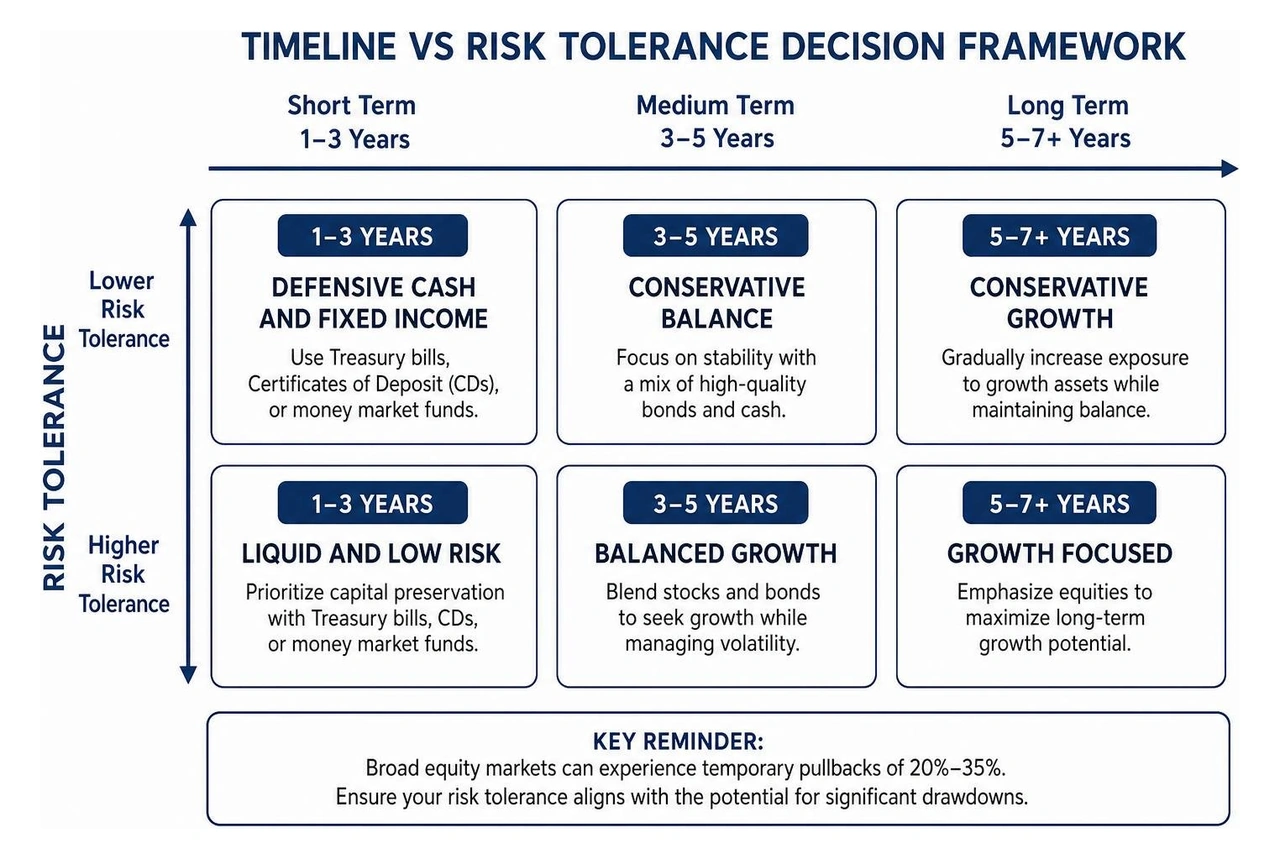
Evaluating your risk tolerance requires honest self-assessment regarding drawdowns. During severe market contractions, broad equity markets can experience temporary pullbacks of more than 20%. If watching a $200,000 portfolio temporarily drop to $150,000 would cause you to panic-sell at the bottom, an aggressive allocation is not suitable for your behavioral profile. Maintaining an appropriate allocation prevents emotional decision-making during inevitable market cycles.
Building portfolio literacy means understanding the distinct role each core asset class plays in wealth accumulation and risk management:
Modern Portfolio Theory demonstrates that asset allocation—the proportional distribution across asset classes—determines the vast majority of portfolio performance and volatility variance over time. A well-diversified portfolio balances growth assets with defensive anchors to capture market upside while cushioning downward shocks.
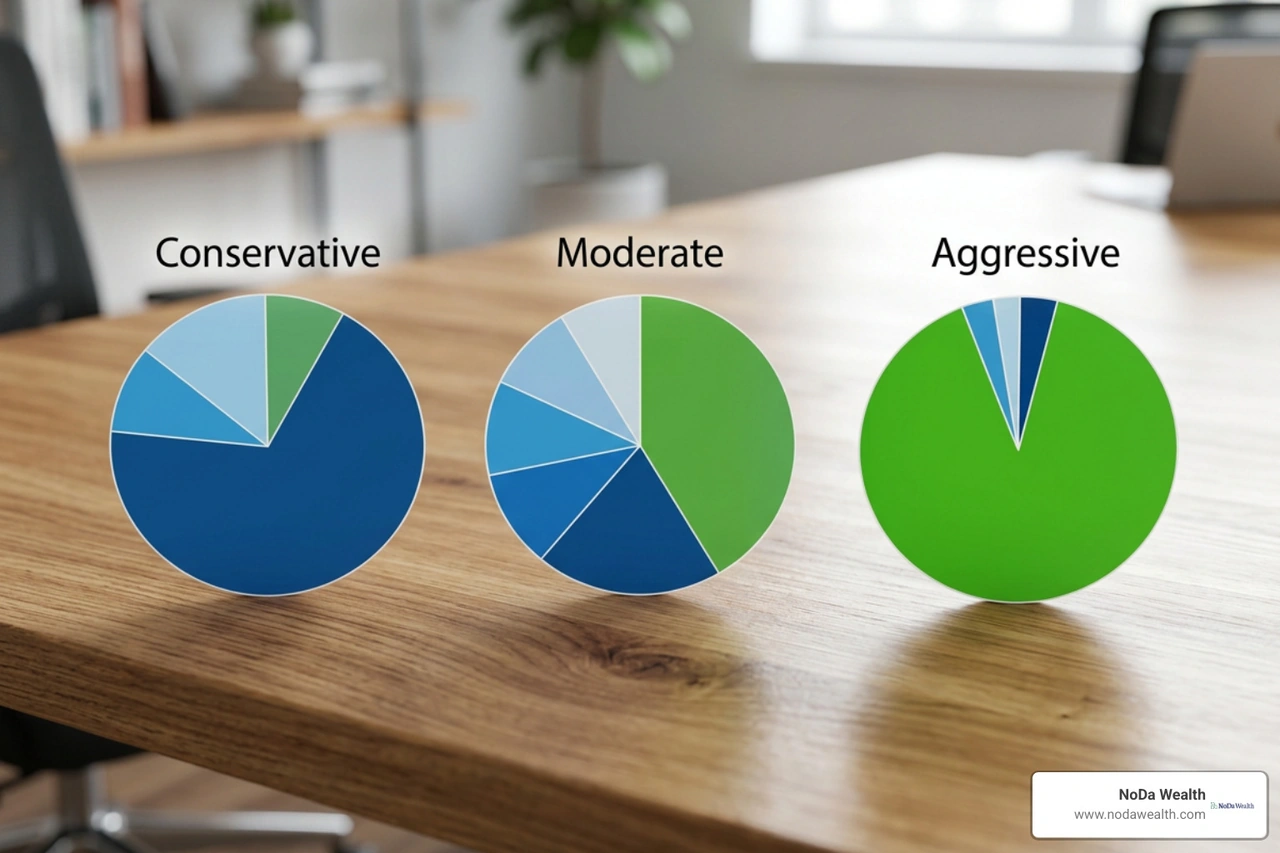
Understanding structural portfolio models and tax placement helps investors prevent common mistakes like unnecessary portfolio concentration, high turnover, or extreme sector tilts.
A common dilemma when managing $200,000 is deciding whether to invest everything at once or spread purchases out using dollar-cost averaging (DCA).
If market volatility makes you hesitate, DCA offers a disciplined structure that eliminates market-timing paralysis while ensuring your capital becomes fully productive on a firm schedule.
Protecting returns from high fees and taxes is critical to compounding wealth. A 1.00% annual advisory or fund expense ratio on a $200,000 portfolio compounded over 20 years can erode tens of thousands of dollars in real growth compared to low-cost broad market index funds with expense ratios between 0.03% and 0.08%.
Implementing proven strategies to grow 200k into 1 million requires keeping recurring fund costs and taxable distributions as low as possible.
Asset location refers to placing specific investments into the account types where they receive optimal tax treatment:
The Rule of 72 provides a straightforward estimate for doubling time: divide 72 by your expected annual rate of return. At an 8.6% average return, a portfolio doubles in roughly 8.4 years.
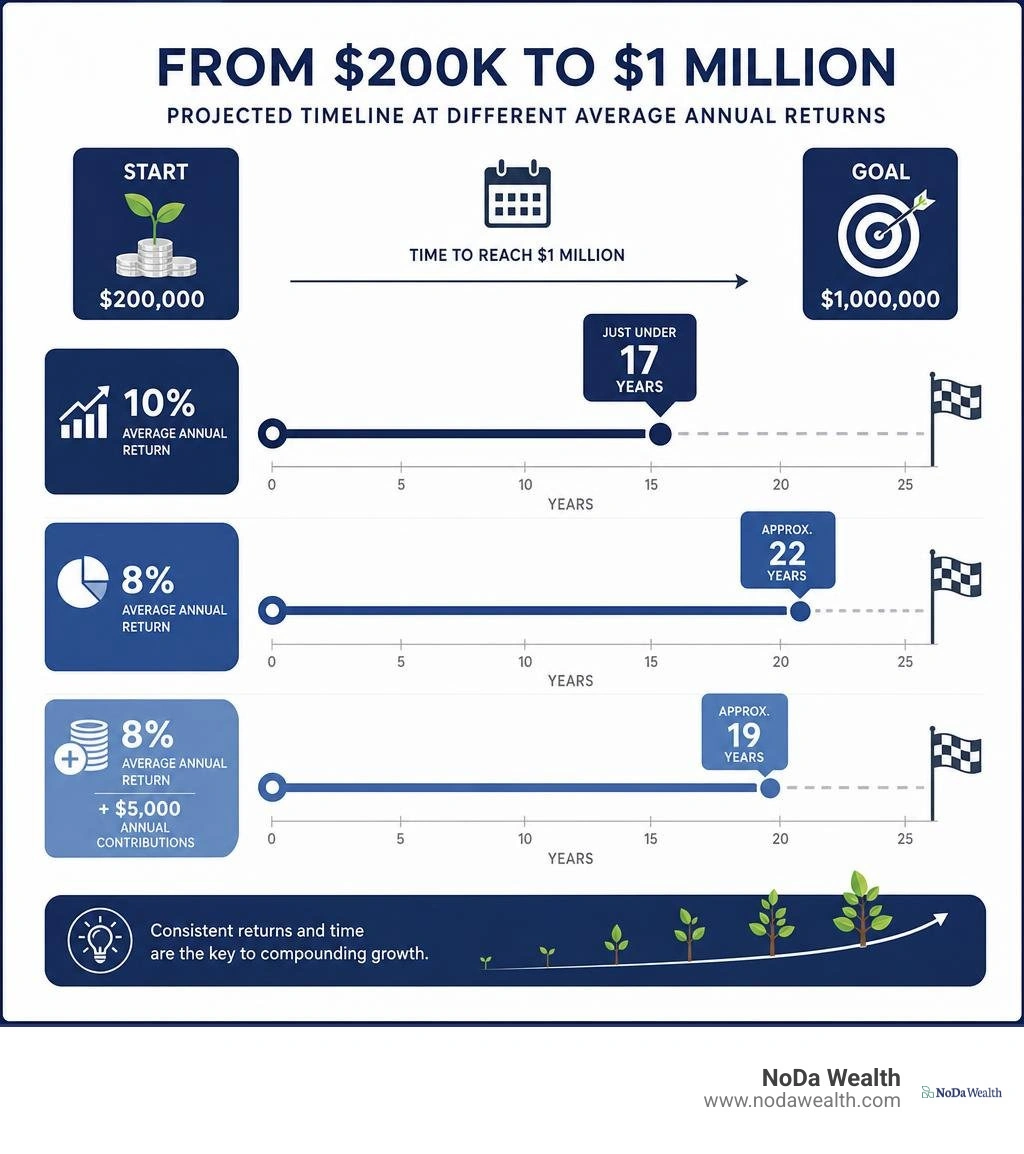
These examples are hypothetical and for educational purposes only. Returns are long-term averages, not guarantees.
Managing a $200,000 portfolio can be handled independently or in collaboration with a professional planner:

At NoDa Wealth, our transparent, data-driven approach provides customized, fee-only fiduciary guidance without product commissions.
At an average annual return of 10%, a $200,000 portfolio will reach $1 million in just under 17 years without additional contributions. With a moderate 8% return and modest ongoing additions of $5,000 annually, the timeline is approximately 19 years.
Historically, lump-sum investing outperforms dollar-cost averaging nearly two-thirds of the time. However, if market volatility causes hesitation, spreading your investments across equal installments over 6 to 12 months provides structure while mitigating short-term timing risk.
This decision depends on your mortgage interest rate and risk tolerance. If your mortgage rate is fixed at a low rate (e.g., below 4%), investing in a diversified portfolio has historically offered higher long-term expected returns. If your mortgage rate is higher (e.g., 6.5%+), paying down the principal offers a guaranteed, risk-free return equal to that interest rate.
Deploying $200,000 successfully is not about chasing speculative assets; it is about building a disciplined, diversified, and tax-efficient portfolio tailored to your unique financial timeline. By establishing a solid financial foundation, minimizing investment expenses, and selecting an asset allocation you can maintain through all market cycles, you position your wealth for decades of sustainable growth.
If you want an objective, comprehensive review of your investment strategy, schedule a free assessment with our fiduciary team at NoDa Wealth today.
The information provided in this article is intended for educational purposes only and should not be construed as personalized financial advice. Please consult with a qualified financial advisor or tax professional regarding your unique situation before taking any action.
Feeling overwhelmed? Let’s simplify things! Schedule your Free Assessment for an easy, 20-minute chat to help you tackle life’s transitions.
Enjoy a hassle-free conversation that puts your needs front and center!
)%20(3).avif)
