How to Find a Fee-Only CFP Near Me: A Practical Guide
Find a trusted fee-only CFP near me with this practical guide to vetting credentials, fees, and fiduciary duty.



Find a trusted fee-only CFP near me with this practical guide to vetting credentials, fees, and fiduciary duty.
To find a fee-only CFP near you in Charlotte, start with local planners, then check three things before booking a meeting: confirm their CFP certification, ask whether they earn commissions, and request a clear fee schedule. Talk with two or three planners to find someone who understands your goals and explains the costs plainly.
Fee-only means the planner is paid by clients rather than product commissions. That can reduce one source of conflict, but it does not replace checking credentials and asking how the planner will put your interests first. The CFP Board's guide to fee-only planning offers more context.
I'm Evan Luongo, and this guide will walk you through the search without adding another complicated task to your week.
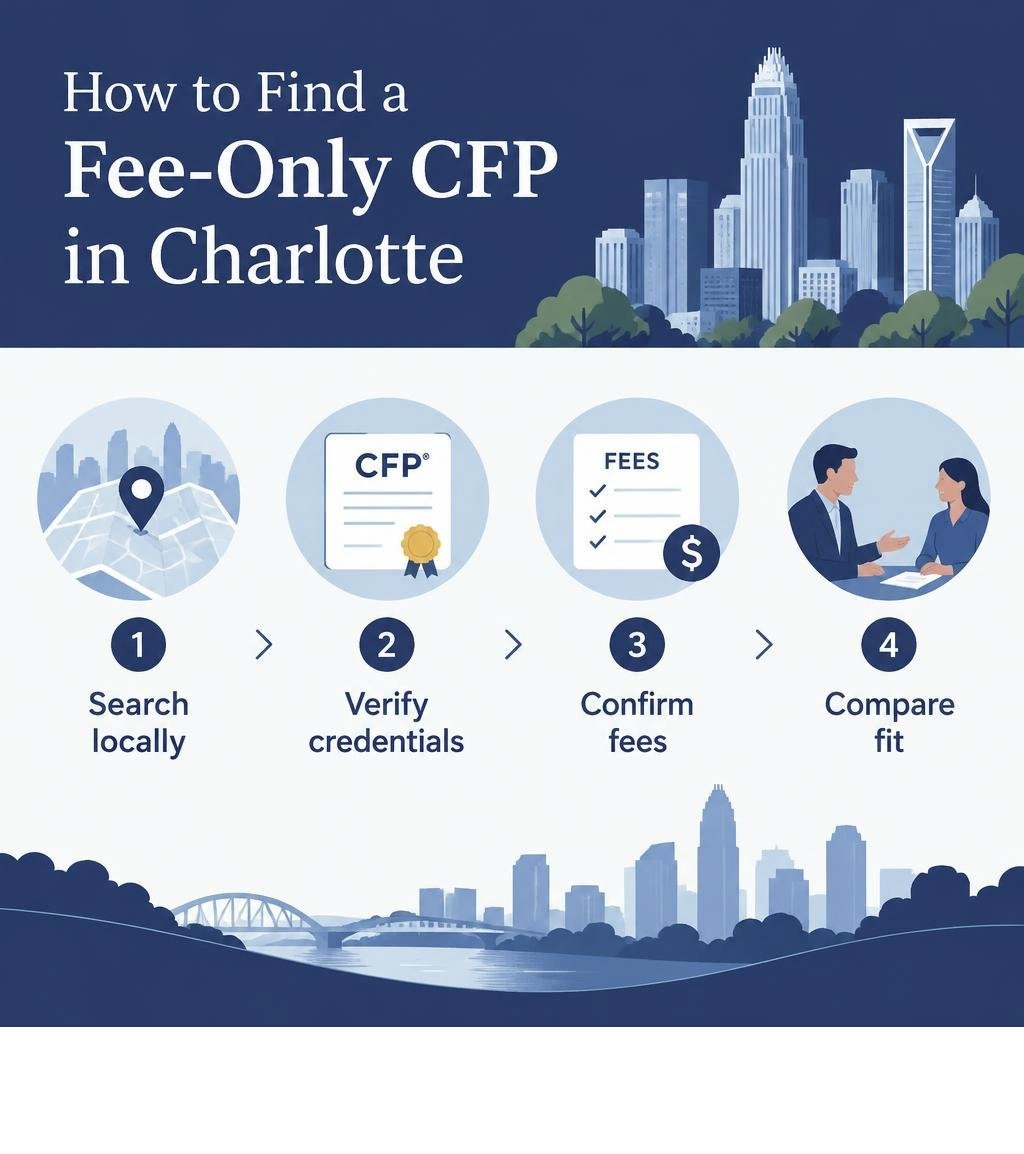
Selecting the right financial planner directly impacts long-term wealth accumulation, tax liability, and retirement readiness. While many people assume all financial professionals operate under identical standards, the financial services industry contains stark differences in compensation structures and legal obligations.
Fee-only fiduciary planning is different from brokerage or insurance sales models because the advisor is paid by clients, not through product commissions. When searching for a fee-only CFP near me, the goal is to find a local professional who can give objective guidance tied to your cash flow, investments, taxes, estate needs, and long-term financial goals.
Working with an independent financial advisor for professionals ensures that comprehensive wealth planning takes center stage. Rather than receiving product pitches disguised as advice, clients receive objective strategies spanning tax optimization, equity compensation management, retirement modeling, and estate planning.
The term "fee-only" defines how a financial advisor receives compensation. Under a fee-only model, the advisor accepts compensation exclusively from the client. They do not accept commissions, sales loads, 12b-1 mutual fund distribution fees, referral kickbacks, or revenue-sharing arrangements from financial product manufacturers.
In contrast, "fee-based" advisors can charge client fees while simultaneously earning commissions on the sale of insurance policies, annuities, or proprietary mutual funds. This creates an inherent conflict of interest, as recommendations may be influenced by third-party payouts rather than the client's financial wellbeing.
| Compensation Model | Primary Revenue Source | Third-Party Commissions | Fiduciary Obligation |
|---|---|---|---|
| Fee-Only | Direct client payment only (AUM, flat fee, or hourly) | Never | 100% of the time across all accounts |
| Fee-Based | Client fees plus third-party product commissions | Yes (insurance, annuities, mutual funds) | Varies; may switch between fiduciary and suitability standards |
| Commission-Only | Product sales and transaction commissions | Yes | Regulated primarily by suitability/best interest standards during sales |
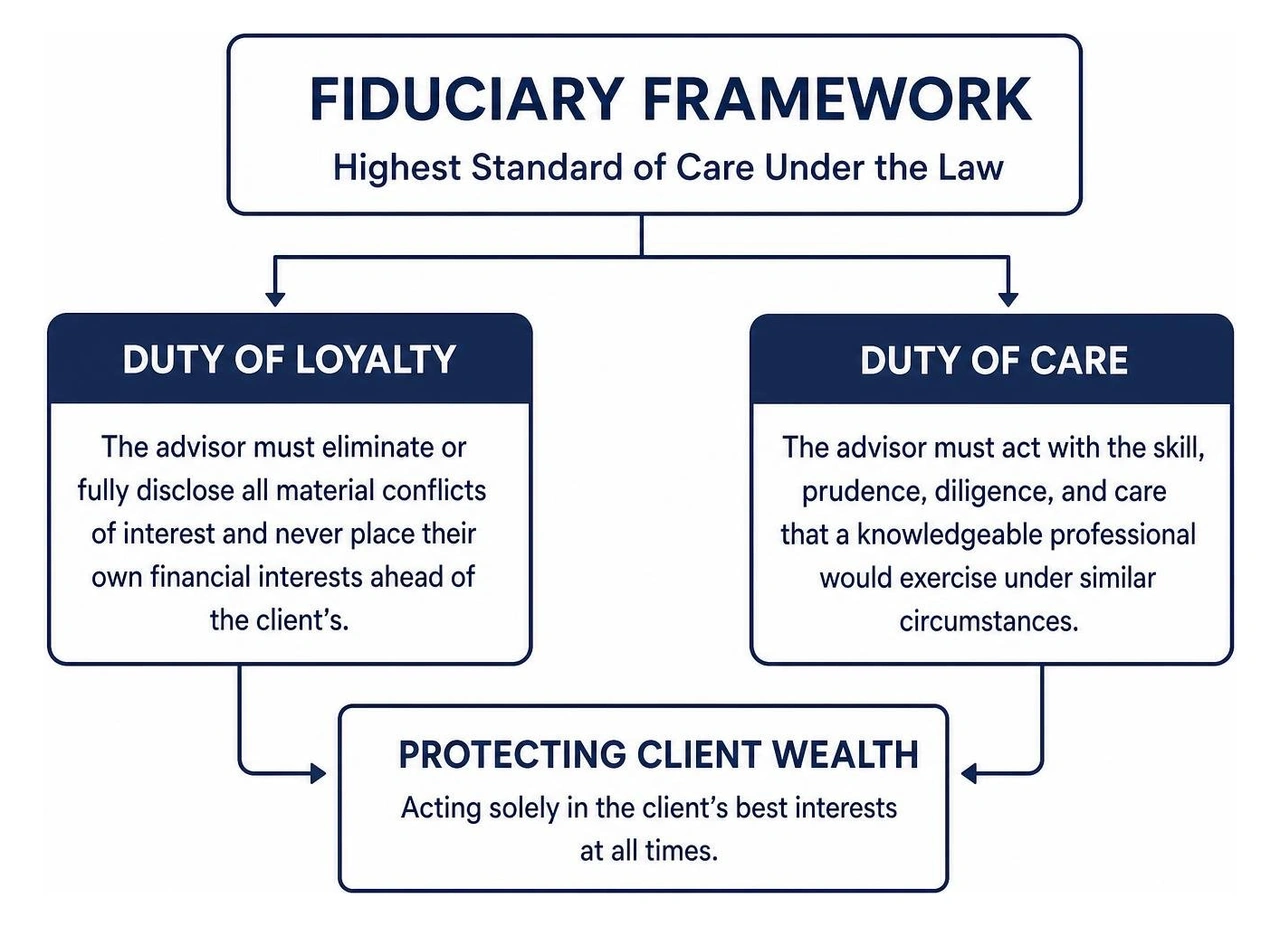
A fiduciary duty is the highest standard of care recognized under the law. It legally binds an advisor to act solely in the best interests of the client at all times, placing client needs above their own or their firm's financial gain.
This duty consists of two primary pillars:
Certified Financial Planner (CFP®) professionals are bound by the CFP Board's Code of Ethics and Standards of Conduct to act as fiduciaries whenever providing financial advice. For a deeper understanding of fiduciary standards within North Carolina, review the fiduciary advisor charlotte guide 2026.

Finding the right local advisor requires a structured evaluation process. Proximity allows for convenient in-person meetings in Charlotte, fostering stronger collaborative relationships while ensuring the advisor understands regional economic conditions, state tax considerations, and local executive compensation structures.
Rather than relying on unvetted search engine ads, start the search using verified professional association directories. These organizations maintain strict membership standards regarding compensation and credentials:
Not all financial planners focus on the same types of clients. After generating an initial list of local practitioners, screen their websites to evaluate specialization and client fit:

Before scheduling an introductory call, independently verify the advisor's background and regulatory standing using public oversight tools:
To review qualifications, philosophy, and professional standards of practice, read more about regulatory disclosures and operational principles.
Transparent fee structures eliminate surprises and allow clients to assess the true cost of financial guidance. Fee-only firms generally utilize one or more of the following pricing arrangements:
Reviewing a firm's published services and fees schedule helps ensure pricing transparency before entering an advisory relationship. Aligning fee models with portfolio complexity is a core responsibility when selecting a wealth manager charlotte nc.
An initial discovery call offers the opportunity to evaluate an advisor's competence, transparency, and personal communication style. Use this vetting checklist during consultations:
Fee-only means that a financial planning firm receives compensation exclusively from transparent fees paid directly by clients. The firm and its advisors do not receive commissions, sales loads, referral fees, or financial incentives from mutual fund companies, insurance providers, or brokerage houses. This structure minimizes conflicts of interest and aligns the advisor's success directly with client financial outcomes.
Advisory costs depend on portfolio size, service scope, and billing methodology. For AUM-based pricing, industry fees generally range from 0.50% to 1.25% annually. For flat-fee comprehensive wealth management, annual retainers commonly range from $4,000 to $15,000 depending on financial complexity, business ownership, and tax requirements. Project-based financial plans typically cost between $2,500 and $7,500.
To verify fee-only status, request Item 5 of the firm's Form ADV Part 2A brochure filed with the SEC or state regulator. Item 5 explicitly details all methods of compensation. Additionally, check directory listings on NAPFA or the CFP Board's portal, and ask the advisor to sign a written fiduciary pledge confirming they accept zero third-party commissions.
Securing independent, fiduciary financial guidance is one of the most effective steps you can take to safeguard and grow your wealth. By prioritizing fee-only compensation, verifying credentials through regulatory databases, and asking targeted questions during introductory interviews, you protect your portfolio from high commission products and hidden conflicts of interest.
Take control of your wealth trajectory by scheduling a free assessment to review your portfolio structure, tax exposure, and long-term financial roadmap.
Educational Purposes Only. Content on this blog is for general educational and informational purposes only. It is not investment, tax, accounting, or legal advice, and it is not a recommendation or solicitation to buy or sell any security or to adopt any investment strategy. Past performance does not guarantee future results. Investing involves risk, including the possible loss of principal.
NoDa Wealth Management, LLC ("NoDa Wealth") is an investment adviser registered with the State of North Carolina. Advisory services are offered only where NoDa Wealth and its representatives are properly registered or exempt from registration. Readers should consult their own financial, tax, and legal advisors regarding their specific situation before making any decisions. For important disclosures, see the site footer and Form ADV.
Feeling overwhelmed? Let’s simplify things! Schedule your Free Assessment for an easy, 30-minute chat to help you tackle life’s transitions.
Enjoy a hassle-free conversation that puts your needs front and center!
)%20(3).avif)
