Smart Wealth Strategies for Engineers Hitting the $200k Income Milestone
Smart wealth strategies: Get essential 200k engineer wealth tips for optimizing equity, taxes, and cash flow to build a multi-million net worth.



Smart wealth strategies: Get essential 200k engineer wealth tips for optimizing equity, taxes, and cash flow to build a multi-million net worth.
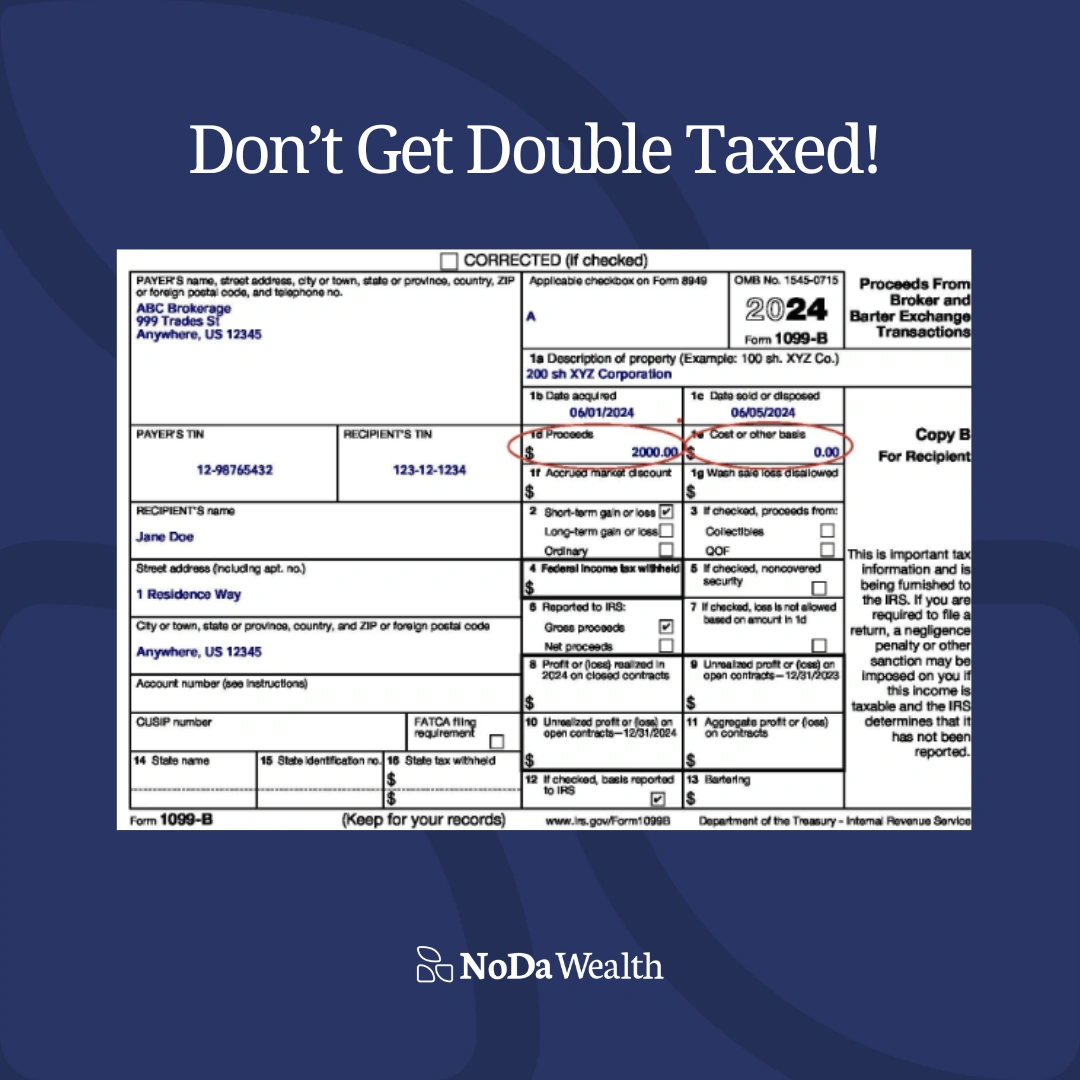
To turn a $200,000 engineering salary into lasting multi-million dollar wealth, the core strategies focus on four key areas: maximizing tax-advantaged accounts like the Mega Backdoor Roth and HSA, mitigating RSU concentration risk and double taxation, implementing a structured 10/10/80 cash flow framework to prevent lifestyle creep, and automating low-cost index investing.
Crossing the $200,000 threshold represents a major milestone in an engineering career. Data from the Federal Reserve shows that earning $200k places an individual in roughly the top 10% of income earners nationwide. Reaching this compensation band requires a deliberate career architecture rather than waiting for annual cost-of-living adjustments.
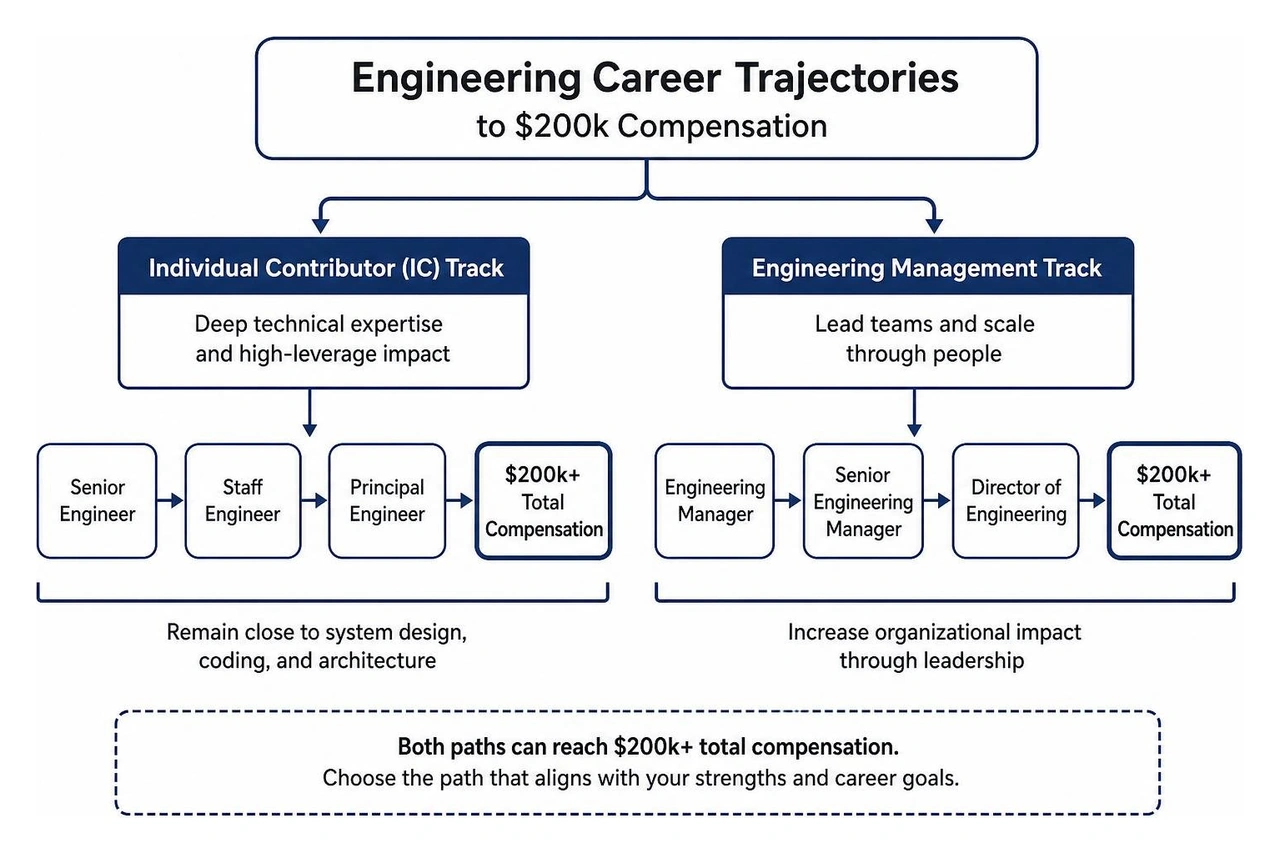
The two primary corporate paths to $200k+ total compensation are technical leadership and engineering management. Both carry distinct tradeoffs in daily responsibilities, leverage, and workplace stress:
Engineers evaluating career progression often review compensation comparisons across engineering levels to see how specialized fields—such as cloud systems, cybersecurity, and machine learning—command substantial market premiums without requiring people management.
Salaried corporate roles are not the only mechanism to reach high earnings. Many technical professionals leverage alternative models:
For engineers mapping the transition from salaried roles to hourly work, evaluating hourly contract paths to $200k provides insight into setting sustainable billable rates, accounting for unpaid overhead, and managing business risk.
Earning $200,000 introduces a new layer of tax complexity. At this income level, federal marginal tax brackets reach 24% or 32%, and FICA taxes claim a measurable share of gross earnings. Turning high income into lasting assets requires optimizing equity compensation and utilizing every available tax-advantaged account.
Restricted Stock Units (RSUs) and Incentive Stock Options (ISOs) often make up a significant percentage of total compensation for senior engineers. However, mismanaging equity can introduce severe tax penalties and concentration risk:
Engineers working in corporate hubs can explore advanced strategies in our guide on maximizing stock options and corporate benefits.
To reduce current taxable income and shield long-term investment growth, engineers should structure their retirement contributions across multiple account types:
Deciding between tax-deferred and tax-free buckets depends on your current marginal rate versus expected retirement brackets. We break down these mechanics when evaluating the Roth 401(k) vs Traditional 401(k) debate.
A common pitfall for high-earning engineers is lifestyle inflation. As base salaries and bonuses expand, fixed recurring costs—such as luxury vehicle leases, premium housing, and discretionary spending—often rise at an equal pace, eroding investable surplus.

A structured cash flow framework prevents lifestyle creep from overtaking your compensation increases. One effective model for high earners is the 10/10/80 framework:
To maintain resilience against corporate restructurings or industry cyclicality, establish a liquid emergency reserve holding 3 to 6 months of baseline living expenses in cash instruments. You can build a system tailored to your household by building a flexible personal budget and comparing high-yield savings vs money market funds to preserve cash without losing ground to inflation.
Housing represents the single largest expense in most engineer budgets. When evaluating real estate purchases or managing an existing home loan, consider these capital allocation principles:
We walk through the mathematical tradeoffs of debt elimination versus portfolio growth when deciding whether to pay down a mortgage or invest.
High income is merely raw cash flow; true wealth is the net worth generated by compounding assets. A software or hardware engineer saving $70,000 to $80,000 annually and earning a historical 7% to 8% annualized real return can accumulate $1.5 million to $2.5 million in net worth across a 15- to 20-year career.
The most reliable, evidence-backed strategy for accumulating long-term wealth is low-cost, broad-market indexing. Over 15-year periods, data from S&P Dow Jones Indices consistently shows that over 90% of actively managed funds fail to beat the S&P 500 index.
An engineer's portfolio should reflect their career horizon and risk tolerance:
| Career Stage / Age | Typical Equity Allocation | Fixed Income / Cash | Primary Portfolio Objectives |
|---|---|---|---|
| Early Career (20s–Early 30s) | 90% – 100% | 0% – 10% | Maximum capital accumulation via total stock market index funds. |
| Mid-Career (Mid 30s–40s) | 80% – 90% | 10% – 20% | Growth with moderate stability; introduction of municipal bonds or total bond market. |
| Late Career (50s+) | 60% – 70% | 30% – 40% | Capital preservation, volatility dampening, and sequence-of-returns risk mitigation. |
A common heuristic is the 120-minus-age rule, which suggests holding an equity percentage equal to 120 minus your current age (e.g., an engineer at age 35 holds 85% equities and 15% fixed income).
To ensure your investment engine runs automatically each pay cycle, review our step-by-step approach to investing your 200k paycheck strategically and learn the discipline of managing lifestyle on equity compensation and bonuses so that one-time windfalls fuel compounding assets rather than recurring bills.
Earning $200k in high-demand technical environments often brings intense on-call rotations, demanding release deadlines, and cognitive fatigue. Wealth planning should not merely focus on accumulating digits on a screen; it must support personal autonomy and well-being.
Before making sudden career pivots, explore our insights on navigating early retirement considerations to balance financial math with purpose and lifestyle design.
Yes. By maintaining a disciplined savings rate of 35% to 50% ($70,000 to $100,000 invested annually across tax-advantaged and taxable brokerage accounts), an engineer earning an average 7% to 8% annualized market return can accumulate $1.5M to $2.0M in approximately 12 to 15 years, and over $3.0M within 20 years.
In most cases, selling RSUs immediately upon vesting is the optimal strategy. Because vested RSUs are taxed as ordinary income at their fair market value on the vest date, there is no tax benefit to holding them compared to receiving a cash bonus of equal value. Selling reduces single-company concentration risk and allows you to redeploy capital into diversified, low-cost index funds.
Location significantly alters the net purchasing and saving power of a $200k income. Higher state income taxes and elevated housing expenses in coastal hubs can reduce investable savings by $30,000 to $50,000 annually compared to low-tax or lower-cost metros, altering long-term net worth trajectories by hundreds of thousands of dollars over a decade.

A $200,000 income provides the fuel to build sustainable wealth, but turning high earnings into lasting financial independence requires deliberate execution. By optimizing equity compensation, preventing bracket creep, automating index investments, and structuring your taxes effectively, you can transform high earnings into long-term personal freedom.
At NoDa Wealth, our fee-only, fiduciary advisors provide transparent, data-driven financial planning for busy professionals. We operate with zero commissions and a straightforward three-step process to align your cash flow, investments, and tax strategies.
Ready to take control of your financial trajectory? Schedule a free assessment to build your customized wealth roadmap and start maximizing your engineering earnings today.
The information provided in this article is intended for educational purposes only and should not be construed as personalized financial advice. Please consult with a qualified financial advisor or tax professional regarding your unique situation before taking any action.
Feeling overwhelmed? Let’s simplify things! Schedule your Free Assessment for an easy, 20-minute chat to help you tackle life’s transitions.
Enjoy a hassle-free conversation that puts your needs front and center!
)%20(3).avif)
